#include <time_optimal_trajectory_generation.hpp>
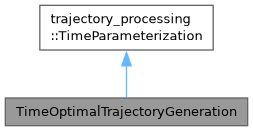
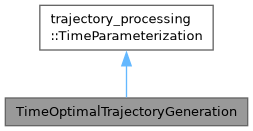
Public Member Functions | |
| TimeOptimalTrajectoryGeneration (const double path_tolerance=DEFAULT_PATH_TOLERANCE, const double resample_dt=0.1, const double min_angle_change=0.001) | |
| bool | computeTimeStamps (robot_trajectory::RobotTrajectory &trajectory, const double max_velocity_scaling_factor=1.0, const double max_acceleration_scaling_factor=1.0) const override |
| Compute a trajectory with waypoints spaced equally in time (according to resample_dt_). Resampling the trajectory doesn't change the start and goal point, and all re-sampled waypoints will be on the path of the original trajectory (within path_tolerance_). However, controller execution is separate from MoveIt and may deviate from the intended path between waypoints. path_tolerance_ is defined in configuration space, so the unit is rad for revolute joints, meters for prismatic joints. | |
| bool | computeTimeStamps (robot_trajectory::RobotTrajectory &trajectory, const std::unordered_map< std::string, double > &velocity_limits, const std::unordered_map< std::string, double > &acceleration_limits, const double max_velocity_scaling_factor=1.0, const double max_acceleration_scaling_factor=1.0) const override |
| Compute a trajectory with waypoints spaced equally in time (according to resample_dt_). Resampling the trajectory doesn't change the start and goal point, and all re-sampled waypoints will be on the path of the original trajectory (within path_tolerance_). However, controller execution is separate from MoveIt and may deviate from the intended path between waypoints. path_tolerance_ is defined in configuration space, so the unit is rad for revolute joints, meters for prismatic joints. | |
| bool | computeTimeStamps (robot_trajectory::RobotTrajectory &trajectory, const std::vector< moveit_msgs::msg::JointLimits > &joint_limits, const double max_velocity_scaling_factor=1.0, const double max_acceleration_scaling_factor=1.0) const override |
| Compute a trajectory with waypoints spaced equally in time (according to resample_dt_). Resampling the trajectory doesn't change the start and goal point, and all re-sampled waypoints will be on the path of the original trajectory (within path_tolerance_). However, controller execution is separate from MoveIt and may deviate from the intended path between waypoints. path_tolerance_ is defined in configuration space, so the unit is rad for revolute joints, meters for prismatic joints. | |
| Public Member Functions inherited from trajectory_processing::TimeParameterization | |
| TimeParameterization ()=default | |
| TimeParameterization (const TimeParameterization &)=default | |
| TimeParameterization (TimeParameterization &&)=default | |
| TimeParameterization & | operator= (const TimeParameterization &)=default |
| TimeParameterization & | operator= (TimeParameterization &&)=default |
| virtual | ~TimeParameterization ()=default |
Detailed Description
Definition at line 193 of file time_optimal_trajectory_generation.hpp.
Constructor & Destructor Documentation
◆ TimeOptimalTrajectoryGeneration()
| trajectory_processing::TimeOptimalTrajectoryGeneration::TimeOptimalTrajectoryGeneration | ( | const double | path_tolerance = DEFAULT_PATH_TOLERANCE, |
| const double | resample_dt = 0.1, | ||
| const double | min_angle_change = 0.001 ) |
Definition at line 918 of file time_optimal_trajectory_generation.cpp.
Member Function Documentation
◆ computeTimeStamps() [1/3]
|
overridevirtual |
Compute a trajectory with waypoints spaced equally in time (according to resample_dt_). Resampling the trajectory doesn't change the start and goal point, and all re-sampled waypoints will be on the path of the original trajectory (within path_tolerance_). However, controller execution is separate from MoveIt and may deviate from the intended path between waypoints. path_tolerance_ is defined in configuration space, so the unit is rad for revolute joints, meters for prismatic joints.
- Parameters
-
[in,out] trajectory A path which needs time-parameterization. It's OK if this path has already been time-parameterized; this function will re-time-parameterize it. max_velocity_scaling_factor A factor in the range [0,1] which can slow down the trajectory. max_acceleration_scaling_factor A factor in the range [0,1] which can slow down the trajectory.
Implements trajectory_processing::TimeParameterization.
Definition at line 924 of file time_optimal_trajectory_generation.cpp.
◆ computeTimeStamps() [2/3]
|
overridevirtual |
Compute a trajectory with waypoints spaced equally in time (according to resample_dt_). Resampling the trajectory doesn't change the start and goal point, and all re-sampled waypoints will be on the path of the original trajectory (within path_tolerance_). However, controller execution is separate from MoveIt and may deviate from the intended path between waypoints. path_tolerance_ is defined in configuration space, so the unit is rad for revolute joints, meters for prismatic joints.
- Parameters
-
[in,out] trajectory A path which needs time-parameterization. It's OK if this path has already been time-parameterized; this function will re-time-parameterize it. velocity_limits Joint names and velocity limits in rad/s acceleration_limits Joint names and acceleration limits in rad/s^2 max_velocity_scaling_factor A factor in the range [0,1] which can slow down the trajectory. max_acceleration_scaling_factor A factor in the range [0,1] which can slow down the trajectory.
Implements trajectory_processing::TimeParameterization.
Definition at line 1029 of file time_optimal_trajectory_generation.cpp.
◆ computeTimeStamps() [3/3]
|
overridevirtual |
Compute a trajectory with waypoints spaced equally in time (according to resample_dt_). Resampling the trajectory doesn't change the start and goal point, and all re-sampled waypoints will be on the path of the original trajectory (within path_tolerance_). However, controller execution is separate from MoveIt and may deviate from the intended path between waypoints. path_tolerance_ is defined in configuration space, so the unit is rad for revolute joints, meters for prismatic joints.
- Parameters
-
[in,out] trajectory A path which needs time-parameterization. It's OK if this path has already been time-parameterized; this function will re-time-parameterize it. joint_limits Joint names and corresponding velocity limits in rad/s and acceleration limits in rad/s^2 max_velocity_scaling_factor A factor in the range [0,1] which can slow down the trajectory. max_acceleration_scaling_factor A factor in the range [0,1] which can slow down the trajectory.
Implements trajectory_processing::TimeParameterization.
Definition at line 1006 of file time_optimal_trajectory_generation.cpp.
The documentation for this class was generated from the following files:
- moveit_core/trajectory_processing/include/moveit/trajectory_processing/time_optimal_trajectory_generation.hpp
- moveit_core/trajectory_processing/src/time_optimal_trajectory_generation.cpp
Generated by
 1.15.0